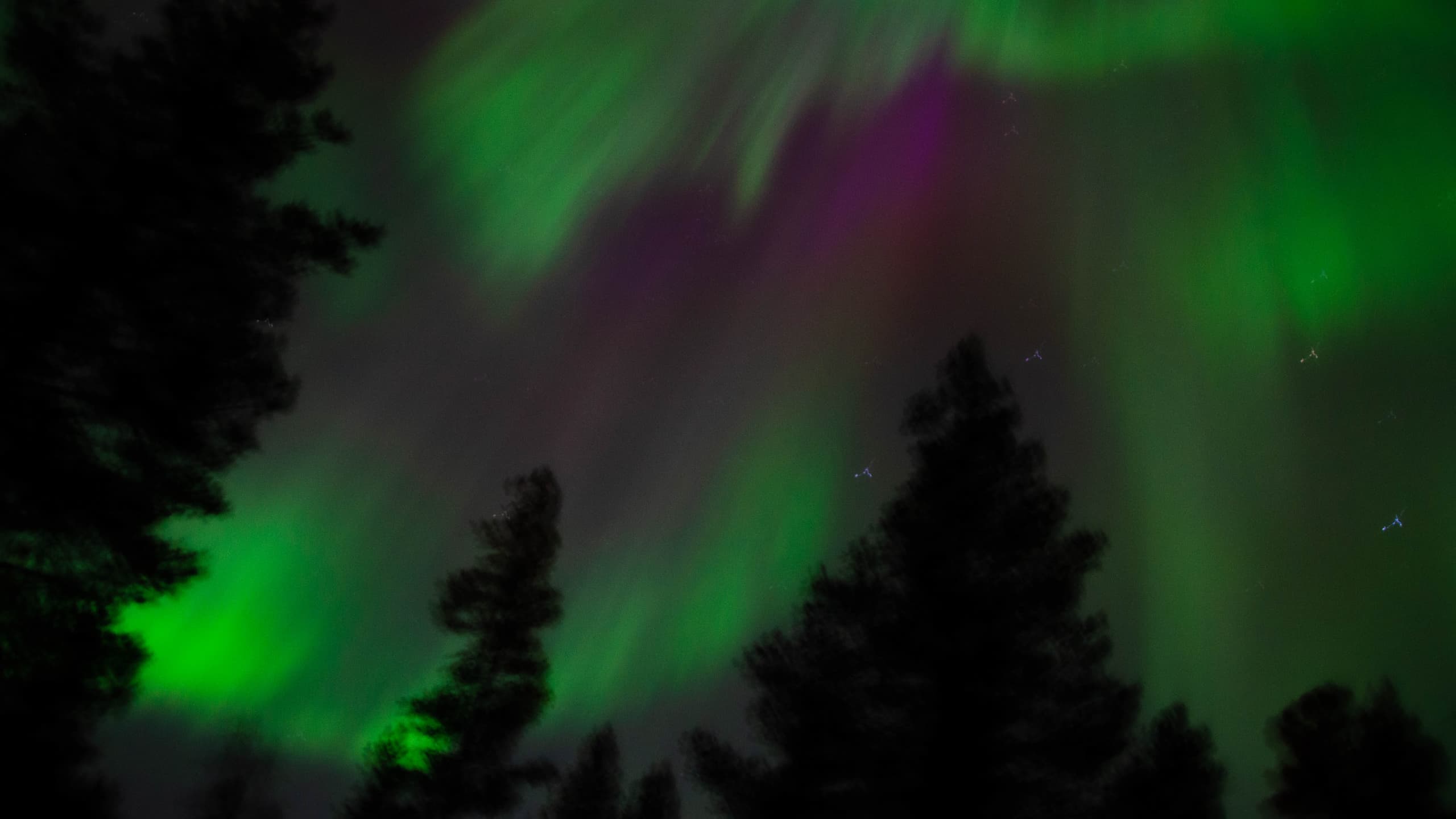
If you have just booked an epic trip to Lapland and are now sitting at home wondering what to wear to see the Northern Lights, we get you!
It does get awfully cold up north.
And the lights are mainly visible in the middle of the night, when temperatures plummet even more.
Don’t worry though, we managed to figure out what to wear to see the Northern Lights and so will you—we’ll tell you all you need to know in this post, including bonus tips and hacks that other blogs don’t mention.
Let’s talk about aurora hunting outfits aka how not to freeze when the outside world feels like someone locked you in a McDonald’s freezer (story for another time!).
This post may contain affiliate links. For more information, please read our Disclaimer.
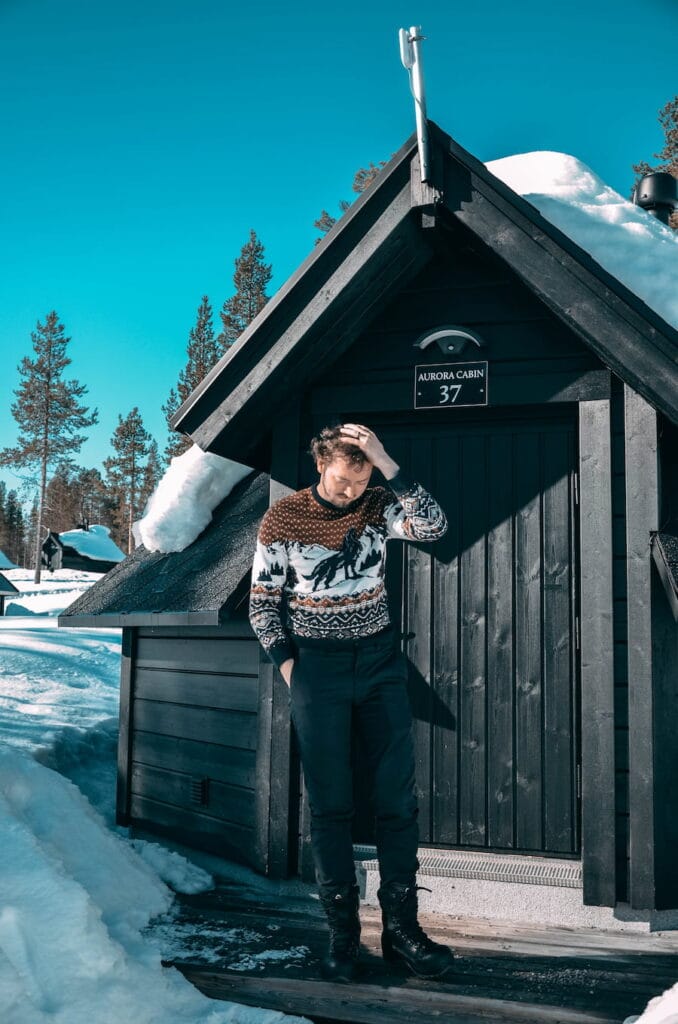
Here’s a little bit about our journey, if you are new here! If you know us, feel free to skip this part.
After leaving our old life in Scotland in March 2022 (it rains too much there), we travelled full-time for almost 2 years. Sounds fancy, doesn’t it? Well, it was. If you think that carrying overpacked backpacks in 45°C heat around streets that aren’t even on Google Maps is fancy. And that’s just 1% of all the fun we had! 😆
During the 2 years we volunteered in Italy and Bulgaria (free travel while learning new skills, anyone?), explored other amazing European countries and backpacked Southeast Asia. Btw, even our secret wedding was more of an expedition than a wedding. 😅
And, of course, we researched and planned everything ourselves, because you gotta keep the budget low, right? If you are like us, you’ve come to the right place, because we want to share all the useful travel tips and info with you!
Excited? Good. Let’s get into it so you can go on your own epic adventures too!
Are you planning, booking, or just dreaming of Lapland?
You got us wondering:
- Have you already booked your trip to Lapland?
- Or are you just thinking about it, seeing whether it would even be possible for you?
- Or perhaps you’re just curious to find out what to wear to see the Northern Lights, because you come from a country where temperatures don’t go below 20°C (just to emphasise: that’s 20°C ABOVE zero) and so you can’t imagine how anyone could dress for such cold weather?
Okay, so we wanna know which situation YOU are in!
Let us know in a DM on our Instagram will you? Or, if you don’t mind sharing publicly, drop your answer in the comments below.
Now the reason we’re asking is simple: we’re nosy and love hearing where life (and maybe a few of our tips) has whisked you off to!
But mainly cause we are nosy. 😆
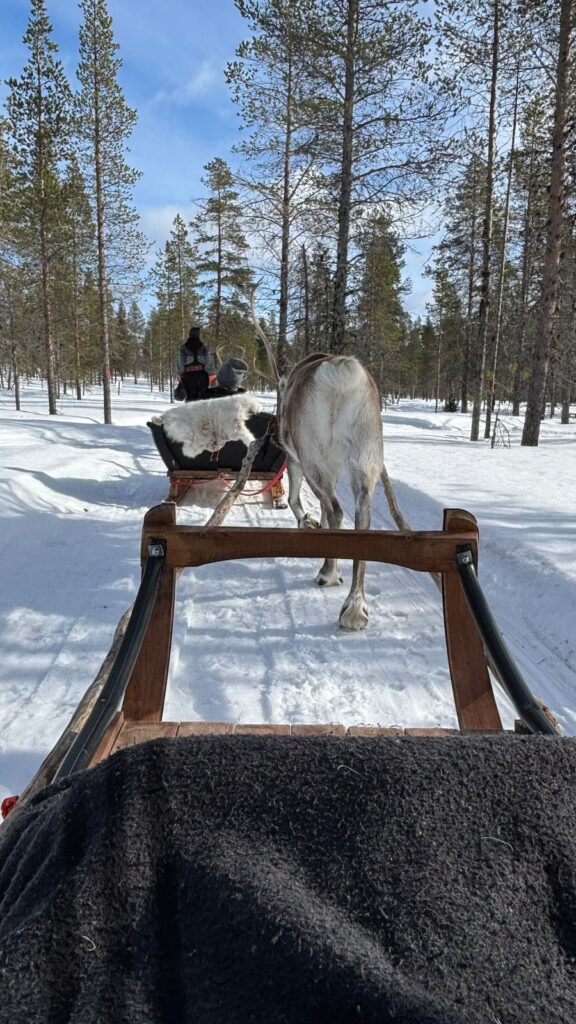
Lapland tips and tricks
If you don’t have your whole holiday booked yet, we’ve got something for you.
You see, this isn’t our only post about visiting Lapland.
Far from it!
We wrote many posts about our Lapland trip, because we absolutely LOVED our aurora-hunting, winter-wonderland holiday!
Although, we do have to admit, it might have something to do with the fact we got married on that trip too! If you want to know more about our crazy, NO-GUEST, unconventional wedding, check this out!
Our point is: if you don’t have the full trip booked yet, check out all the other Lapland posts we wrote – we shared all the tips and tricks from our personal experience there – the kind of stuff AI won’t tell you.
The main place where you’ll find everything you need, including links to all the other articles is our Lapland on a Budget post.
It’s our Lapland Mothership—you’ll be able to see everything we’ve done on our epic trip and learn all the tips and tricks to have a holiday of a lifetime yourself! Make sure to bookmark the post, so you can return to it when planning your Lapland adventures.
Now. Let’s talk about what to wear to see the Northern Lights!

📷 @za_ostrene
What to wear to see the Northern Lights: the basics
We thought we’d start with some basic info, because even though it’s kinda obvious, it’s easy to forget these things in the chaos of planning a big trip, like a holiday in Lapland.
Btw, if you ever do start feeling overwhelmed, you can reach out to us – we can help you with your planning on a live call, answering any questions, adding helpful tips, or just making sure you don’t get too stressed out—Lapland planning should be exciting and fun, and not something that is draining life out of you!
The 2 problems of dressing for aurora watching
The 2 main reasons why figuring out what to wear to see the Northern Lights is so difficult?
- The lights are visible during winter nights, when temperatures get really cold.
- Somehow, your ability to dress yourself like a functional human vanishes when you’re woken up at 2am or are sleep-deprived—both basically guaranteed if you’re chasing the Northern Lights.

Before the adventure starts — make sure you’ve got travel insurance sorted
The 2 things you need for watching the Northern Lights
- Clothes that can handle the cold. Not your “I’ll just wear three pairs of jeans and hope for the best” kind of solution, but proper Arctic gear. Figure out beforehand how you’re getting it (buy, rent, borrow, summon from the spirits in Frozen 2). We’ve got a full guide on that if you need a hand.
- A battle plan. Because stumbling outside half-asleep at 2am when it’s –20°C is… a vibe, but not the fun kind. You’ll find out all you need to know in this post you’re reading right now—all the tips and tricks, so you are prepared, and know exactly what to wear to see the Northern Lights, once you are in Lapland on your amazing holiday.
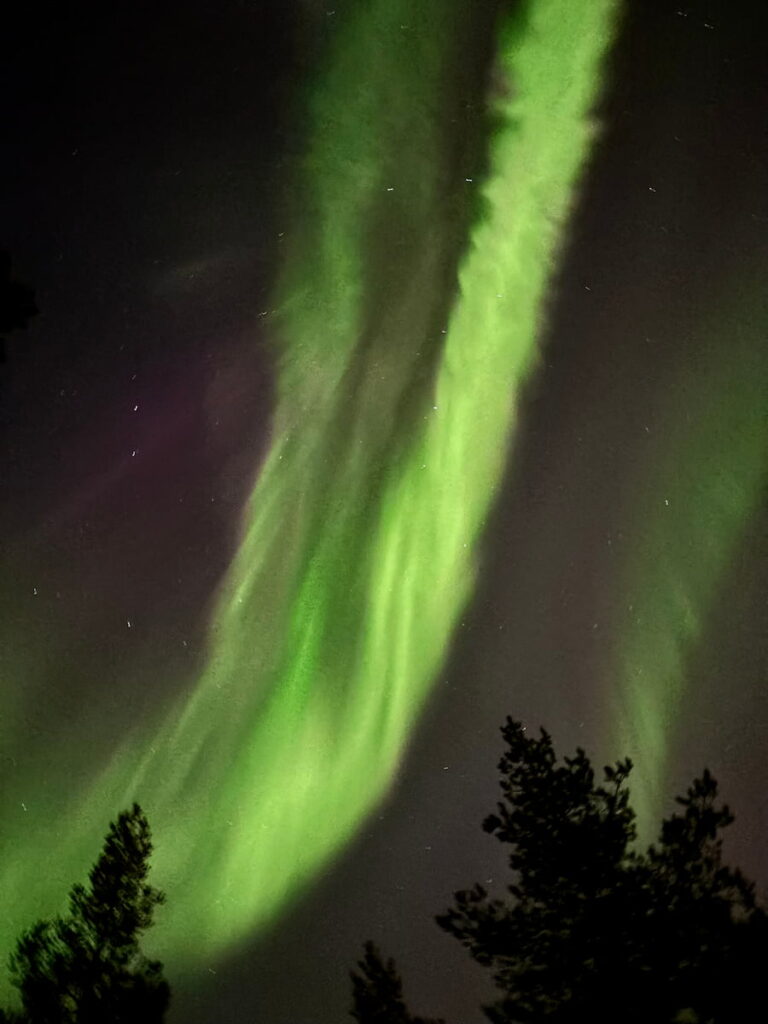
Aurora watching: a true story
When we were in Lapland, we saw the Northern Lights on 2 out of our 4 nights there (this actually matches up with the 50% chance rule which we talk about here).
Want to know what happened on those nights?
Don’t do this
Night 1 was a total chaos—our aurora alerts app showed a low chance of the Northern Lights being visible, so when the alert alarm did go off in the middle of the night, we were totally unprepared.
Chaos ensued.
We did get to see Aurora Borealis, which was an experience we’ll never forget (especially since first there was a big drama).
But we also decided that for the rest of our time in Lapland?
We’ll be better prepared.
How to prepare for watching the Northern Lights
The next day we were a lot smarter.
First thing we did, during the day, was to look for the best place for aurora watching—even in a northern lights resort this might not be obvious!
And in the evening?
We got ready.
We were smart and prepared well, so that if the Northern Lights did make an appearance again, it wouldn’t be a totally chaotic experience.
And this is why we decided to write this post.
Not only so you know what to wear to see the Northern Lights.
But we also included all the extra tips and hacks we discovered, which no one else is talking about, but which make all the difference to how magical (or miserable) your night turns out.
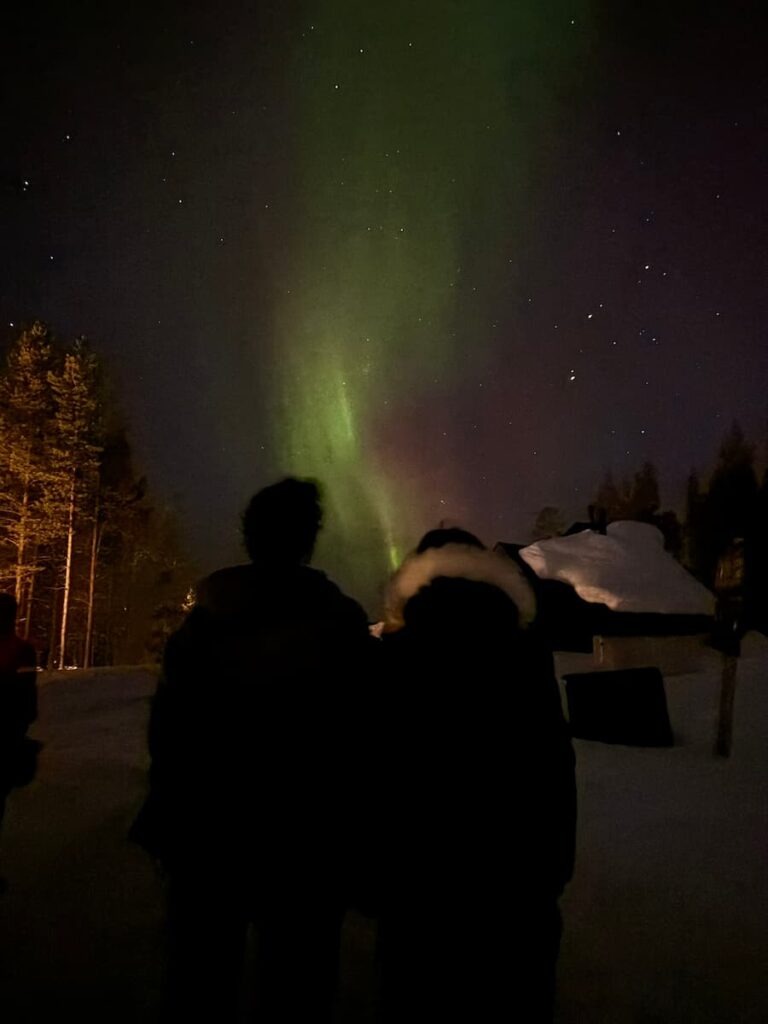
Must-know info when planning outfits for aurora viewing
When planning what to wear to see the Northern Lights, keep these things in mind:
- Yes, it’s awfully cold at night in Lapland during winter. HOWEVER! If you hate cold weather (Mirka, being a summer baby, was reaaaaally worried about this), there is something you can do. You might want to think about when you visit Lapland.
Compare the average night temperatures of -13°C in December vs -5°C in April (when we did our awesome Lapland trip). We talk about tips like this in our Lapland on a Budget guide, so remember to check it out. (Though keep in mind that’s averages. For us, the temperature still dropped to -10°C during night at the start of April.) - When shopping for Lapland outfits, check the activity rating on functional and thermal clothes – it basically tells you how warm the item will keep you depending on how active you are (standing still vs. running after Santa when he tells you you can’t get a forever holiday voucher). (Btw, in that case, may we suggest the next best thing—full-time travel?)
- Take into account how you’ll go chasing the Northern Lights. Will you be in a car, only popping out to snap a few pictures? Or will you do Lapland car-free, signing up for a group tour that includes thermal clothing for the night? Or maybe you want the ultimate luxury—staying in a glass-roof cabin, so whenever you get too cold, you can just hop right back into your bed and watch the lights from there?
- More is more! You can always take layers off and put them into your backpack (we’ll cover what you should pack into your backpack for aurora viewing later in this post), but if you end up freezing your bum off as the Northern Lights dance above you and hating every moment of it because of that? You’ll be wishing you packed more clothes.
- That being said, you don’t have to necessarily pack more clothes, if you are smart about it. Instead of wasting money paying for heavy suitcases, do this: check out our packing tips so you pack like a pro traveller, learn about the right materials for harsh winters, get functional clothes, and use the layering technique we’ll cover in the next section.
Now, let’s talk specifics. Here’s what to wear to see the Northern Lights.
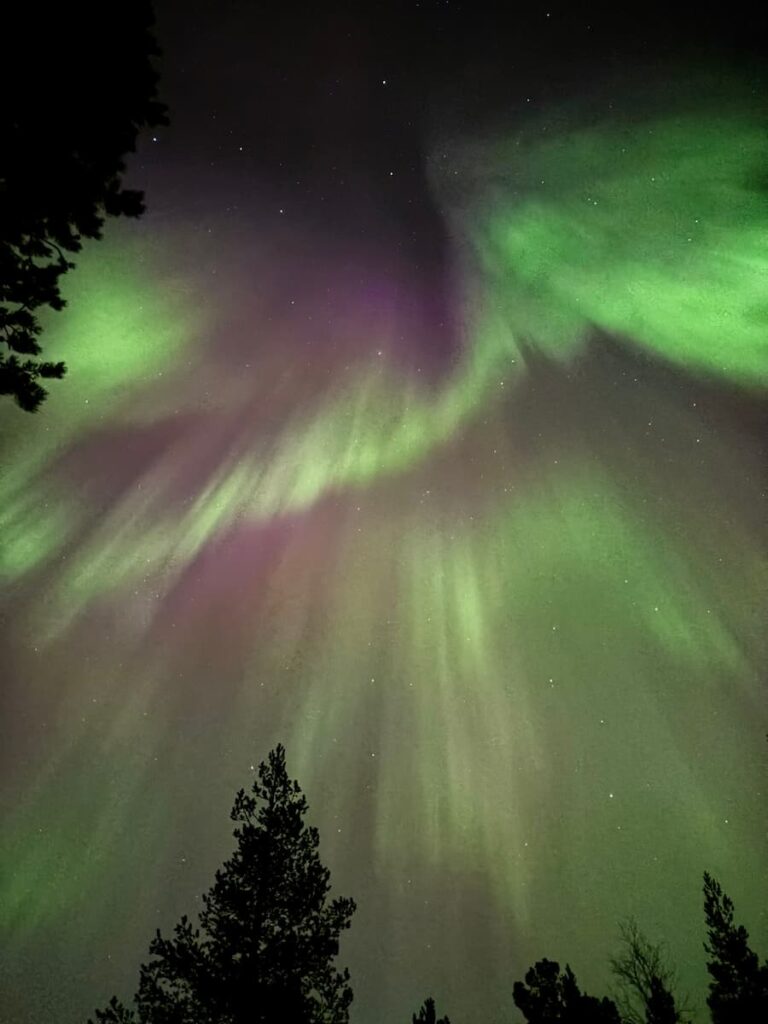
Btw, if you’re planning on renting a car to chase the Northern Lights, make sure you do it smart.
Use a price comparison tool to get the best deal and save yourself money – Lapland is expensive enough!
Tip 1: Layering for Northern Lights hunting
If you are a budget traveller like us, this will be no problem for you.
Know how you layer your clothes up, so you pay less for luggage on budget airlines?
Or how you bundle yourself up for those fun awful airport sleepovers?
This is the same idea!
Now, if you are a fancy person who doesn’t usually travel on a budget, and you are not used to looking like an onion when you travel, you’ll have to learn more about the layering technique, so you don’t get pneumonia in Lapland (but in case you do, make sure you have travel insurance).
Need-to-know layering basics
These are the basics you need to know:
- Most people (unless you are Scottish and mad, like Daniel), end up wearing 3 layers when out and about in Lapland.
- Your base layer is skin-tight. It should keep you warm, but also be moisture-wicking, so you don’t get sweaty (that’s a recipe for a total Arctic disaster).
- Your mid layer is your insulation. Think winter jumpers and good trousers. This layer is not skin-tight, in fact, it should be the opposite. Loose enough so it fits comfortably over your base layer and allows you to move. Plus the air trapped in between the layers keeps you warm.
- Your outer layer is your protection from the elements. Think waterproof and windproof jacket and trousers.
- Bonus tip: if the weather is really cold or you are not a naturally warm person, you might want to double up some of the layers. You can, for example, wear two sets of base layers. Or add another mid layer jumper on.
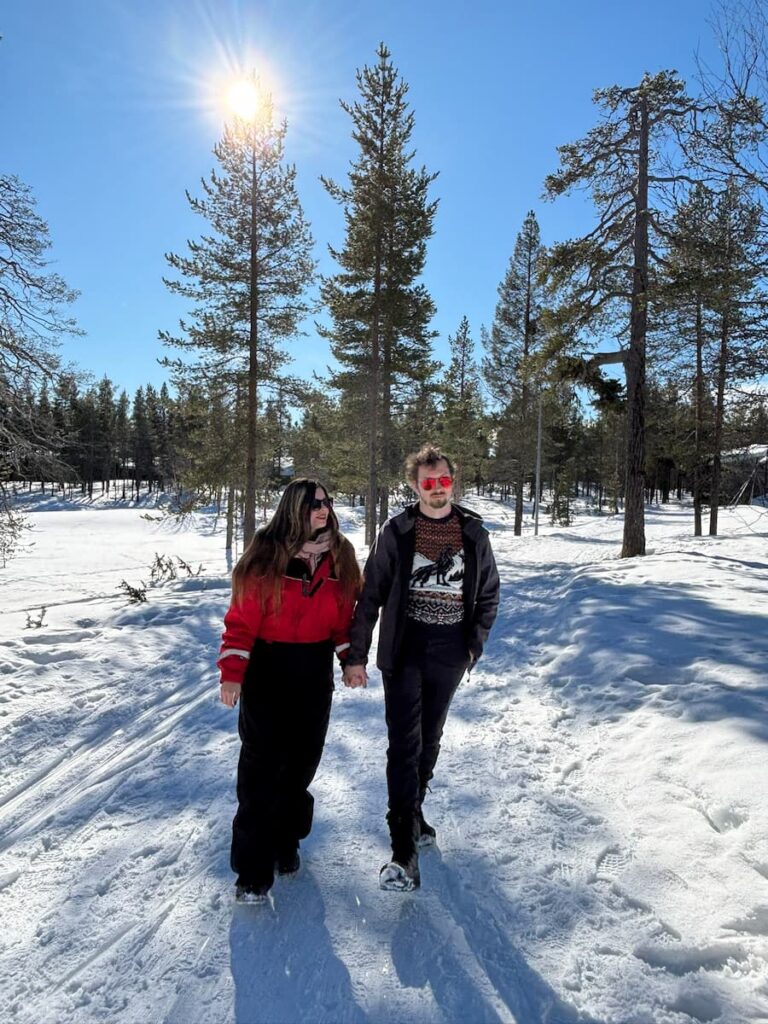
📷 @za_ostrene
How to keep your outfits simple
Don’t overthink it. You already know the basics – we just went through them.
What we would recommend you do now is:
- Read the rest of this article so you know what to wear to see the Northern Lights.
- Start putting together a packing list if you have a Lapland holiday coming up.
- Create sections in your packing list. Either organise by layer (base, mid, outer) and note down what everyone you are packing for is taking (e.g. base layer: me: long sleeve merino from Decathlon, husband: long sleeve thermal from Lidl, kid no. 1: xyz, kid no. 2: xyz—you get the point).
Or organise by person, so, for example: Husband: base, mid, outer. Kid no. 1: base, mid, outer. - Starting early and keeping yourself organised like this means you don’t forget something important, like base layer trousers for your partner. It also means you can, potentially, save a lot of money – Mirka and her sister discovered they could use their workout leggings as base layer trousers, so only bought thermal tops, for example!
You know about the 3 main layers, but there is something else you have to consider. Choosing the right materials!
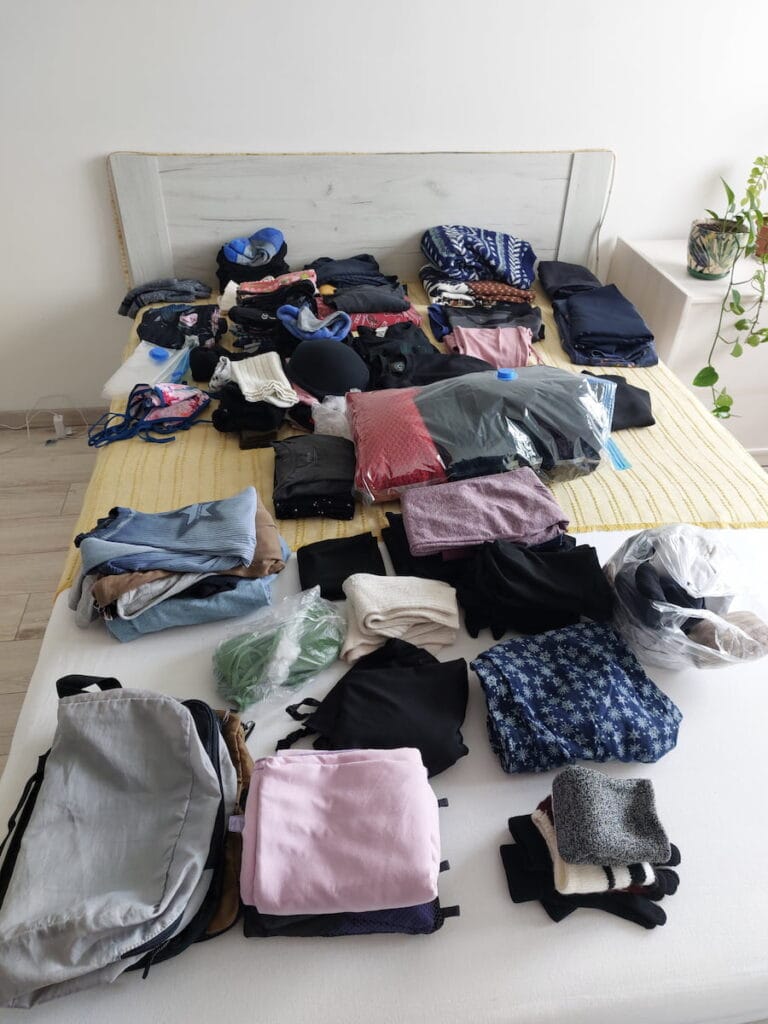
Tip 2: What materials to choose for aurora watching
We are keeping things simple here. You can go read super long guides on what to wear around Lapland, detailing all the technical aspects of different materials, but we think what you really need is:
- Simple tips that you can easily remember and apply to your trip
- Unusual hacks that you won’t find anywhere else, straight from our personal experience
Sound good?
Okay, let’s talk about what materials you should choose when aurora hunting, but let’s keep it simple.
Remember the 3 layers?
They should each be made of different materials, to get the most out of them.
First though, an important rule.
Don’t make this mistake when packing clothes for Lapland
The one thing to keep in mind when picking clothes for your Lapland holiday is:
Avoid cotton!
This might be surprising to you – it certainly was for us, since everyone is promoting cotton clothes.
We discovered, though, that cotton is terrible in winter—basically, it absorbs moisture, meaning you’ll end up feeling wet, cold, unhappy and, in extreme cases, even hypothermic.
We know that got serious real quick, but we just want to make sure you don’t put yourself and your travel party at risk.
Don’t pack cotton clothes for Lapland.
Okay, enough of scaring you. Now you know the one material to avoid, let’s talk about what materials you should pack.
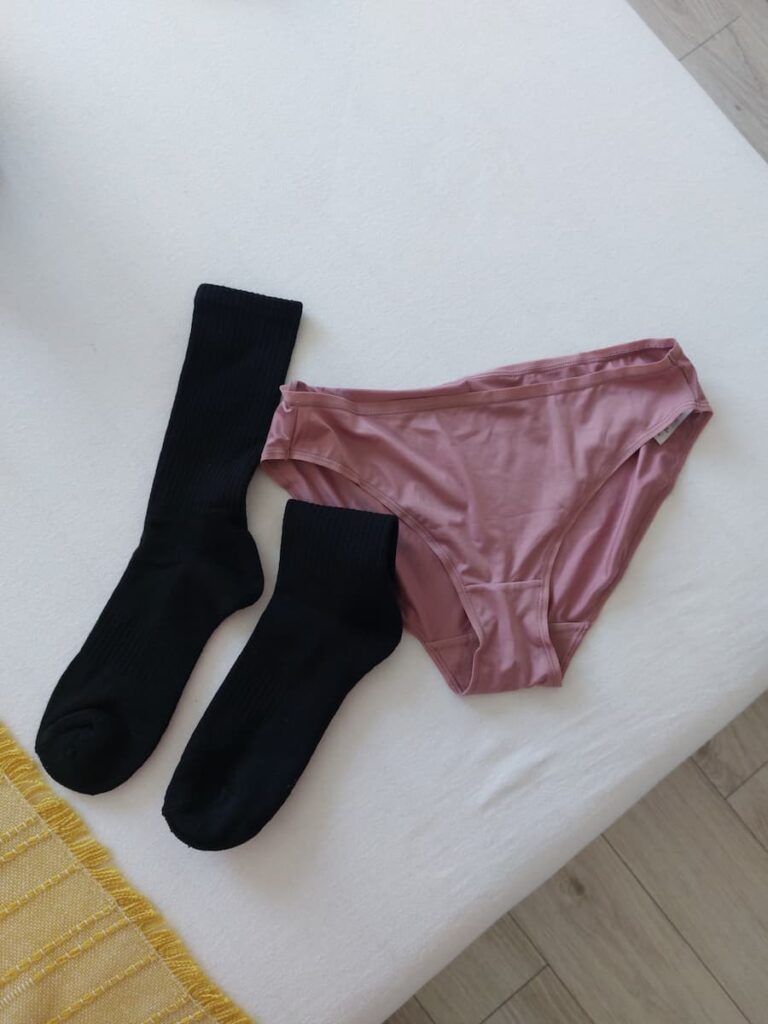
The best materials to pack for Lapland
Very simply, this is what you are looking for when planning your Lapland outfits:
Base layer
Merino or synthetic materials —remember, they should be moisture-wicking.
Look for clothes that are specifically designed to be base layers, or check what gym clothes you have that you could use.
A word of warning on merino wool
Little caution when it comes to merino: don’t get sucked into the hype, especially, if you are doing Lapland on a budget.
We were desperate to justify spending more on merino clothes, but, as it turns out they are:
- Super expensive, if they are good quality
- If they are cheap, it is usually because the merino content is very low. Always check this—don’t get scammed by a “merino T-shirt” label that hikes up the price and yet there is only 20% of merino wool in the Tee
- Low quality merino clothes might not be the most comfortable. Mirka and her sister found them all too scratchy to wear them as base layers
- We have seen many people de-hyping merino clothes, saying that they are an overkill for the casual holidaymaker
- They are also more pain in the butt to take care of—again, not ideal for travellers who might be washing their clothes in all sorts of conditions
We are not saying you shouldn’t buy merino clothes.
But we would advise you look into them more and consider, whether synthetic base layers are a better option for you.
We chose to go with functional base layers from Decathlon, but also Lidl, and they worked just fine. That being said, Daniel did get one merino T-shirt from Decathlon, because it was affordable, and he is happy with it.
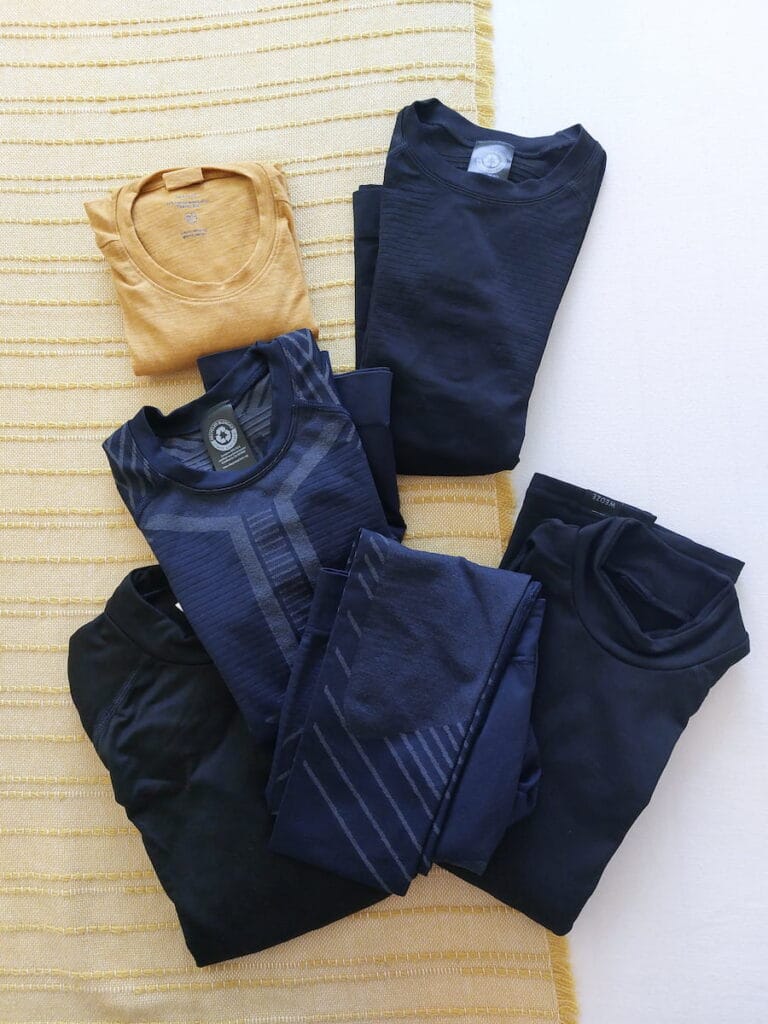
Mid layer
These are your wool and fleece clothes. If possible, see if you can source some vintage clothes as your mid layer.
Why?
- Wool and fleece pieces were way more common back in the day, before cooler synthetics came along
- It can help you save a lot of money
- Sourcing older, second-hand clothes is also much more sustainable
- Last but not least, who doesn’t wanna feel like they are in Wham!’s Last Christmas music video??? (Linking it through, because you do now wanna listen to it, right?)
This is primarily what we did – borrowing woollen jumpers and even accessories like socks and hats from Mirka’s parents. It was all their retro clothing that saved us money, got more use, and it ended up being such a vibe too!
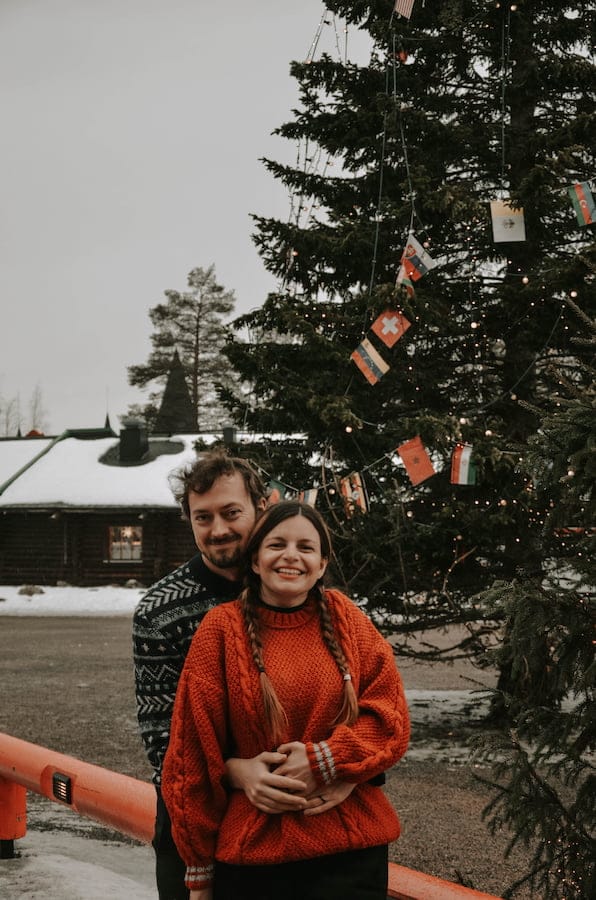
📷 @za_ostrene
Outer layer
Remember, this is the waterproof and windproof layer, so your winter jacket and a good pair of shell trousers.
If you don’t do winter sports, this might be a difficult layer to source, because these items are usually quite pricey (if you want good quality).
Consider doing these things:
- Shopping second-hand or, at the very least, at the end of a winter season, when sales are on
- Borrowing from friends and family who do winter sports
- Renting the outer layer clothes once in Lapland
- And our favourite option – getting the clothes for free. Yes, even without being influencers! Let’s talk about that.
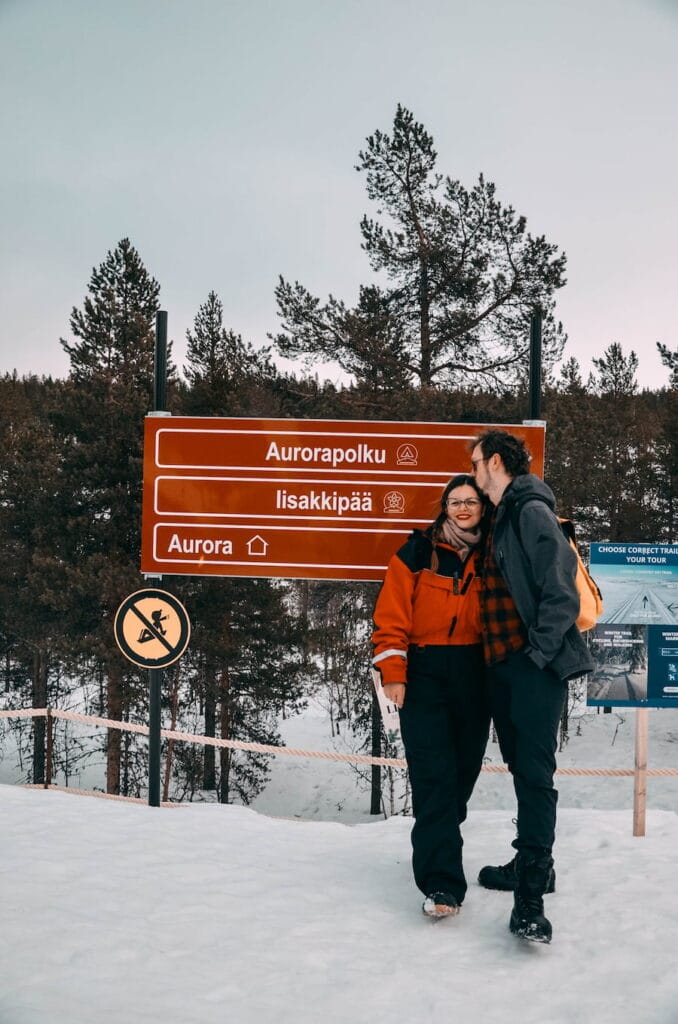
📷 @za_ostrene
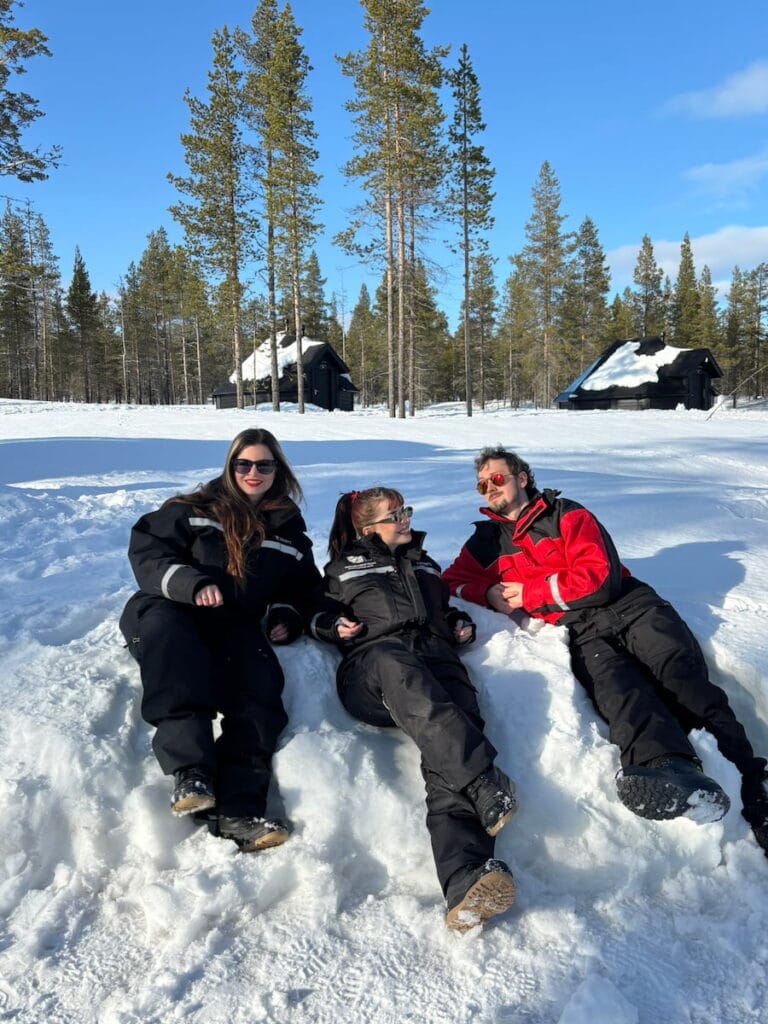
Tip 3: Snowsuits
This is a secret hack that is a total gamechanger if you can get it.
Renting snowsuits!
Or even better, booking accommodation that comes with free snowsuits!
We have a whole post where we talk about the best ways to get clothes for Lapland, so check that out.
Btw, if you want to know how we find great accommodation for our trips (like a budget aurora hotel with free snowsuits), get our FREE Booking.com guide!
Why you should rent snowsuits for aurora watching
Just briefly, in case we haven’t convinced you yet:
- With a good snowsuit, you don’t have to faff putting layers and layers on in the middle of the night. We had our base layers already on (more on this in tip no. 6), threw a sweater on and just jumped into our snowsuits, ready to go watch the Northern Lights.
- With regular clothes, as you move about, they move too. Duh! The thing is, the arctic cold pays attention and takes this as an invite—next thing you know, you are feeling weirdly cold around your right ankle and you don’t even know why. With snowsuits though? You are pretty much wrapped up from
head to toeneck to boots, so no matter how much you move, the cold stands no chance of making friends with you. - Snowsuits also look super cool, so if you want Instagrammable pics, or just to feel awesome on your holiday, this is the way to go.
If you want to know where we got our amazing snowsuits from, read this post – it’s full of tips on how to get your winter gear without spending an awful lot of money.
Tip 4: Accessories for Northern Lights watching
Okay, we named this section in the least imaginative way possible and to be honest?
It’s not even really accessories we are talking about.
A scarf is an accessory if you wear it around sightseeing Rome in October in 19°C.
In Lapland?
A scarf is a must for survival.
Okay, you could go with a neck warmer. Or a turtleneck jumper. Or a Buff, if you are Scottish like Daniel and so always warm.
But the point is, make sure you pay attention to the small things when it comes to deciding what to wear to see the Northern Lights.
Thankfully, you don’t need much. Mainly:
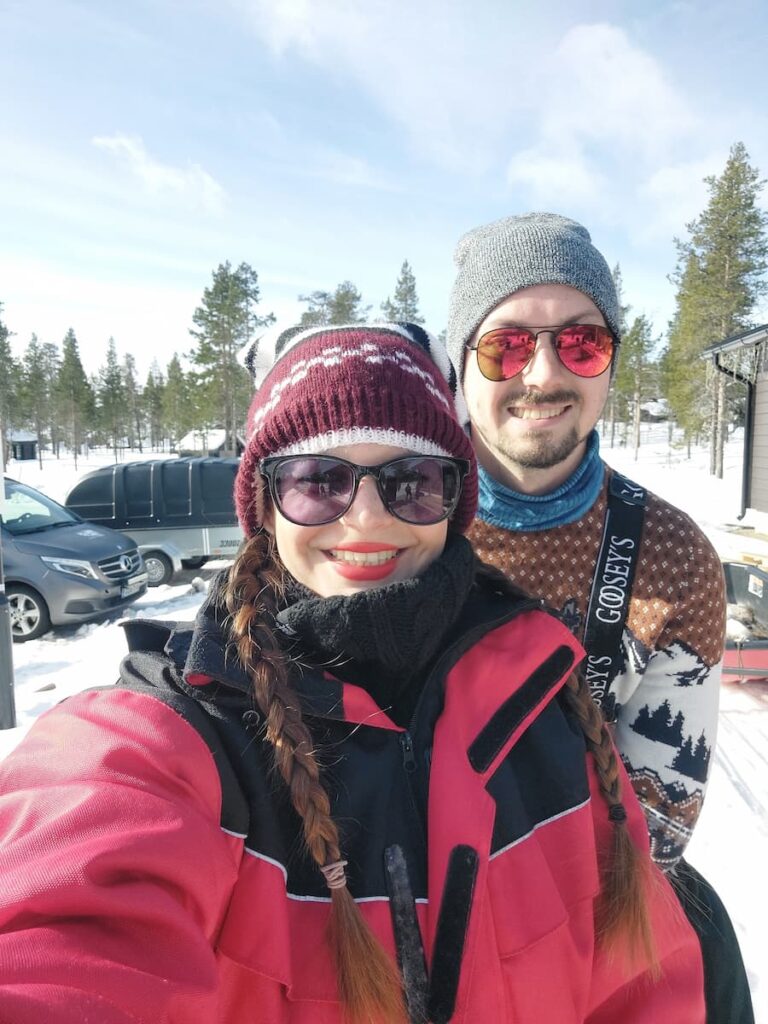
- Hat
- Neck protection
- Gloves
But you should make sure they are all good quality, the right materials (for example a warm woollen hat and waterproof gloves) and the right style (mittens instead of gloves. Alternatively, also touchscreen gloves).
Don’t make this mistake
A little bonus tip for you here, because you know what’s super easy to do?
Running out of your cabin in the middle of the night, because your aurora alert just went off, and you are super excited that the Northern Lights might be visible, and forgetting to grab your hat or your gloves in the process!
This might not be a big deal if you are in a northern lights resort where you can see the lights from, pretty much, your cabin’s front door.
But if your plan is to quickly hike up a hill.
Or venture into a nearby dark forest.
Or jump into a car to drive to a dark location without light pollution that you have scoped out earlier in the day.
And you forget something crucial like gloves?
You might have to go all the way back to get them—that or lose your fingers, but we have a feeling that won’t be your preferred option!
Do this instead
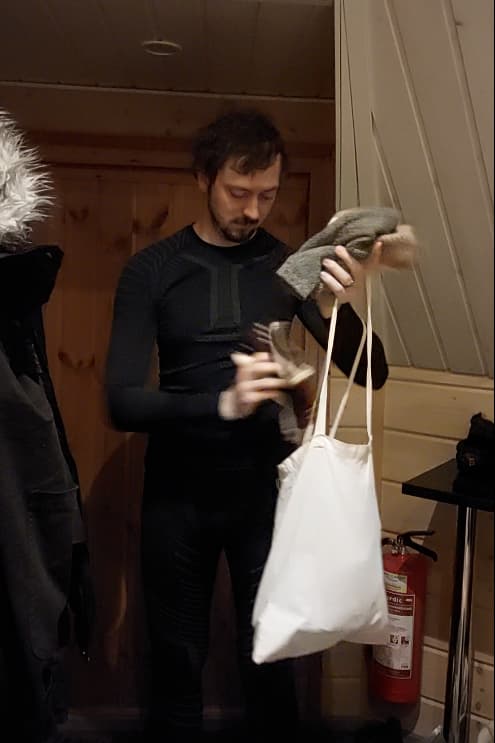
What we would advise you do is pack your small accessories into a bag.
We talk more about packing a backpack in tip no. 8, because it’s not just about what to wear to see the Northern Lights, it’s also important to know what else you might need.
But basically, in the chaos of getting dressed in the middle of the night when the Northern Lights appear, it might be easy to forget to grab a hat. Or to grab just one glove and drop the other one.
Especially if you are sharing a cabin. And there are many of you. Or you have kids, who will be bouncing of the walls at the possibility of seeing Aurora Borealis.
What we did was, we stuffed our hats, gloves and scarfs into a tote bag before going to bed, and then, when our aurora alert went off, we just got dressed, grabbed the tote bag, and sorted out the accessories when we got to our pre-chosen dark location.
The one important thing? Make sure someone actually does grab the bag with the accessories. Decide who is responsible for this and also make sure someone else checks them—it’s easy to forget about a tote bag in the excitement of an aurora alert going off (and being half asleep doesn’t help either).
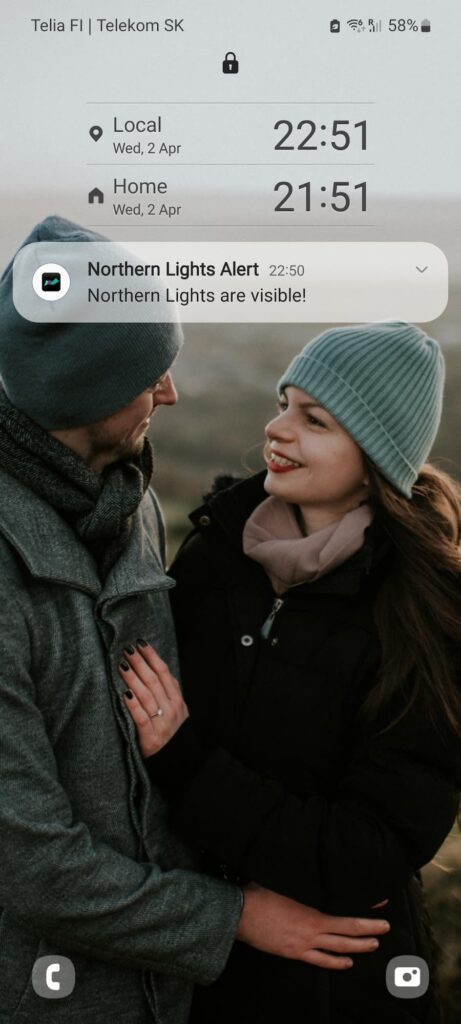
Btw, if you want personalised aurora alerts, make sure you stay at a northern lights resort that offers aurora tracking (like the awesome one we stayed at)
Tip 5: Wear the right shoes
In Slovakia, there is a saying “cold comes from the feet” and we know other cultures agree with this too.
If you are not familiar with this, it basically means that if your feet get cold, the rest of you will feel cold too—you might even get ill!
The good news?
It works the other way too, meaning if you keep your feet nice and toasty, the rest of you will feel warmer as well. That’s why having the right shoes for your Lapland adventures is so important!
What shoes do you need for Lapland
When we were planning our Lapland trip, we learned we needed shoes that did 4 things:
- Were warm enough
- Were suitably big, so we could fit double socks in comfortably, if needed
- Were waterproof, because rain and snow
- Had a good grip, so we wouldn’t fall on our butts when walking on icy paths (but remember to get travel insurance just in case)
Here is what shoes we ended up getting:
- Daniel took autumn boots he already owned (disclaimer here: remember, he is Scottish and so should not be used as a point of reference for human beings who feel the cold like normal people😆)
- Mirka bought new snowboots from a shop called Sportisimo
- Mirka’s sister bought new snowboots from Decathlon
Now, these were the ONLY pairs of shoes we took on the holiday meaning:
- We packed light, so our luggage was easier to manage – important since we did Lapland without a car
- We saved money on checked-in luggage (remember the mock packing tip for this!)
- We were able to keep our cost down by sharing a room as 3 adults everywhere, because we didn’t have a lot of luggage
- We looked absolutely crazy, getting married in winter boots, but hey, we are travellers at heart and our wedding reflected that perfectly

📷 @za_ostrene
How our winter shoes let us down
We were pretty happy with our winter boots—we are pros at figuring out what to wear to see the Northern Lights!
Or so we thought.
What we didn’t expect was that when we went to pick up our free rental winter gear at the hotel, the staff member said:
“Do you also need winter shoes?”
And then he leaned over the counter, looked at our AWESOME boots and said:
“Oh yes, you do.”
😳
Snap.
Our confidence went out of the window, together with our (apparently) rubbish winter boots.
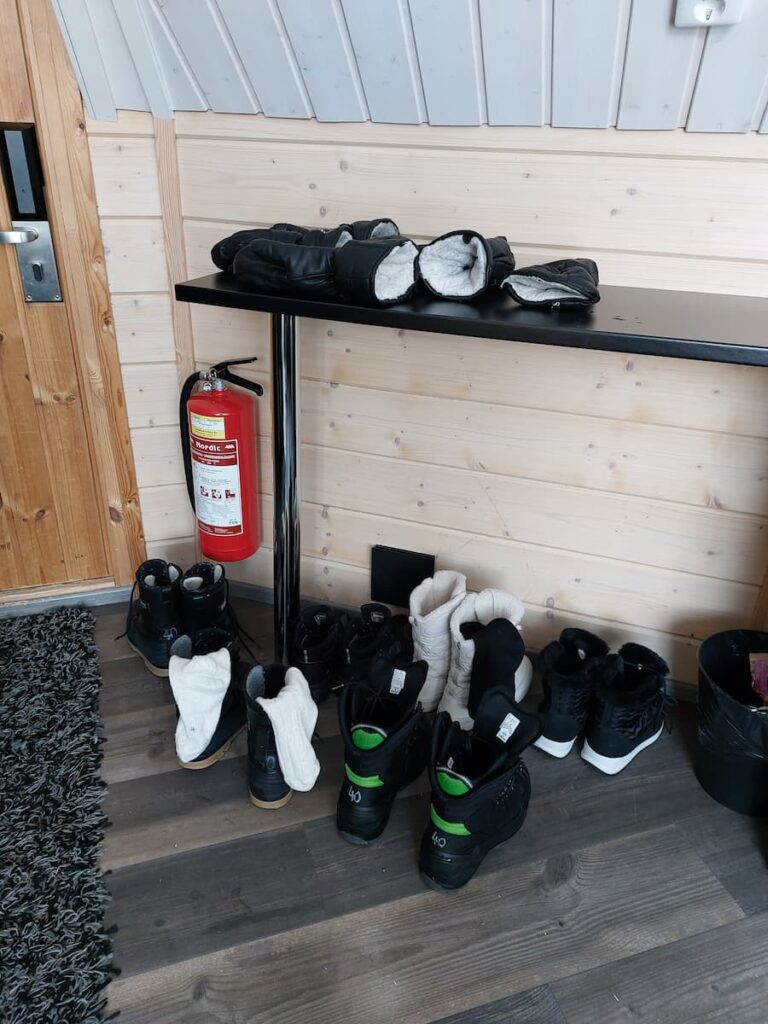
The truth about winter shoes
The thing is, our shoes were good.
Good enough to walk around on snow paths.
Good enough to walk around cities in winter.
Heck, good enough to even get married in!
But for the Arctic?
We were better off with the borrowed snowboots our resort provided us with (for free! Be smart and pick your accommodation well).
Here’s why:
- They were proper waterproof
- They had better grip, which stopped us from falling on our butts as we shuffled from our Aurora Cabin to the restaurant for dinner
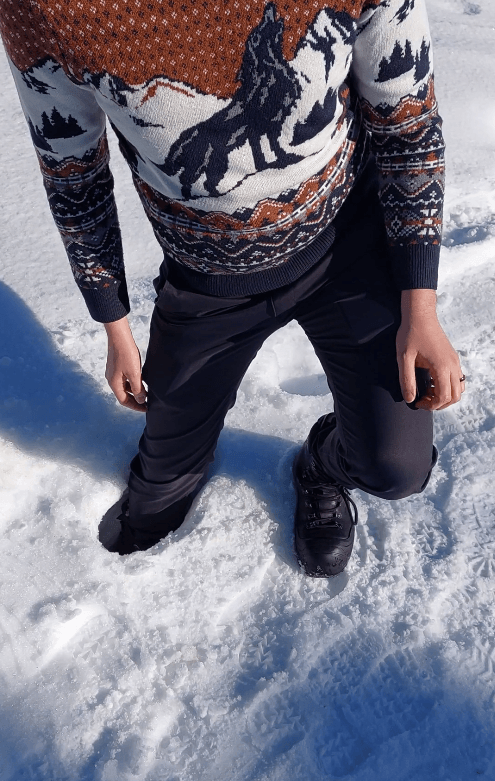
- They were high boots, which turned out to be a lifesaver whenever we (far more often than we care to admit) strayed off the path and plunged into thigh-deep surprise snowbanks—in our defence, it’s impossible to tell where the path ends and the snow blanket begins!
Btw, speaking of falling on your bum and breaking both legs in the process (that escalated quickly), make sure to get travel insurance when going to Lapland.
You will be exploring the Arctic after all! You’ve got to prepare more than just deciding what to wear to see the Northern Lights!
So pick a good insurance company that will cover all the winter activities you want to do.
We recommend True Traveller, because they are awesome, and their customer service is next level. We are pretty sure they are on Santa’s Nice List.
Back to what to wear to see the Northern Lights – make sure you have good shoes. If you don’t feel like investing a lot of money (and time shopping) into a pair of winter boots you’ll never use again, consider renting. Remember, this post covers the different options for sourcing your winter gear.
Moving on to a slightly unhinged territory now. Here is a tip we don’t see people talking about (possibly for a reason 😬).
Tip 6: Sleep in your base layers
A little disclaimer here: we are not sure if this is an unconventional thing to do, but hear us out.
Remember how we told you the first time the Northern Lights appeared for us we weren’t ready and it was chaos?
Well, we discovered that trying to get out of our warm beds and squeezing ourselves into the base layers at 1am, bumping into everything (and each other) in our Aurora Cabin was not the way we wanted to experience the Northern Lights. 😅
The solution
Next evening?
We decided to pre-dress.
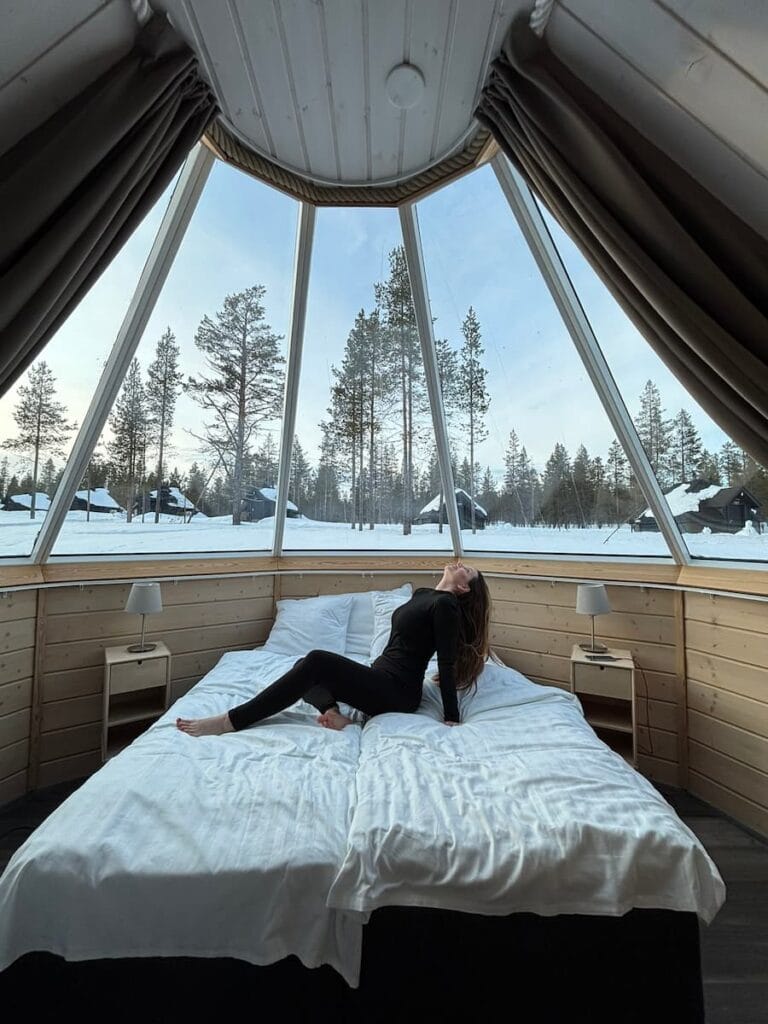
Our base layers were super comfy, so we kept them on instead of pjs.
That way if the aurora alert alarm went off in the middle of the night, we would be at least partially dressed already and not having to struggle so much.
Confession: the Northern Lights showed up so early the second night, we didn’t even have a chance to go to sleep in the base layers, but we still think it’s a super useful hack to try (we stayed in them until morning in case the aurora showed up again.)
📷 @za_ostrene
Pro tip
If you are considering sleeping in your base layers, think about their thermal rating and your own body temperature when you sleep. The last thing you want is being woken up in the middle of the night by your aurora alarm, drenched in sweat and, instead of saving time, having to waste more of it by changing out of your soaked base layers into fresh ones.
We found that with our base layers, we were comfortable sleeping without a cover, and could turn down the heating in our Aurora Cabin too.
Let’s continue with this topic of preventing 2am chaos. Here is another unknown tip that might just save your night time sanity!
Tip 7: Organise your outfits
This is a tip that no one seems to be talking about, but it can make all the difference.
The problem
Imagine this: You are soundly asleep in your Aurora Cabin, after a whole day of hiking around the beautiful Arctic wilderness (one of the best activities when doing Lapland on a budget, btw!) when suddenly your aurora alert goes off!!
Excitement level: unreal!!
Panic level: beyond unreal.
Suddenly you and your whole travel party is scrambling around the cabin, trying to locate their clothes, grabbing the wrong ones, putting other people’s shoes on by accident, hold on a minute, THESE ARE NOT EVEN MY SOCKS, LET ALONE SHOES! Everyone is trying to get out of the door as fast as possible, and it’s a chaos that only happens when woken up unexpectedly at 2am.
Because, we don’t know how about you, but we don’t function well when woken up in the middle of night. 😬
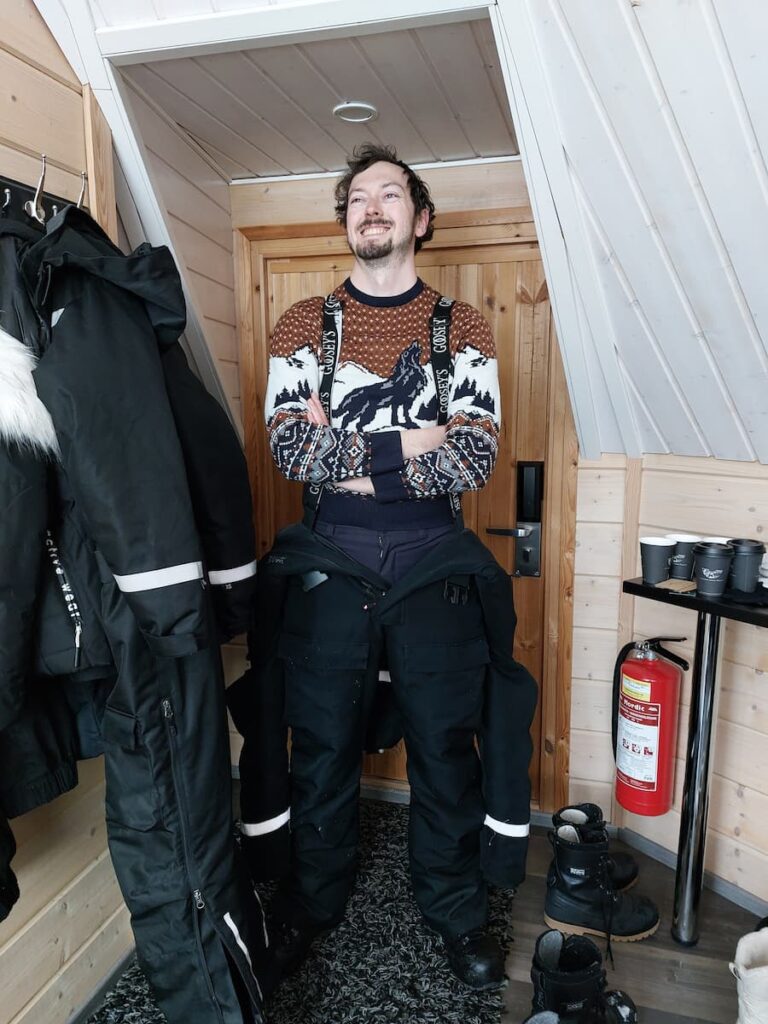
The solution
Thankfully, there is a simple solution that will save your sanity and prevent possible arguments no one wants to have at 2am.
Organising your outfits.
This is especially helpful if:
- You are sharing one cabin with multiple people (money-saving hack that we used to do Lapland on a budget!)
- Your cabin is pretty small (our Aurora Cabin did not come with loads of space, but it compensated for it by having a glass-roof!)
- Your winter outfits are the same or very similar (anyone else wearing black constantly? Or maybe you were smart about not buying clothes for Lapland and got the awesome free snowsuits like we did?)
Here is how to organise your outfits:
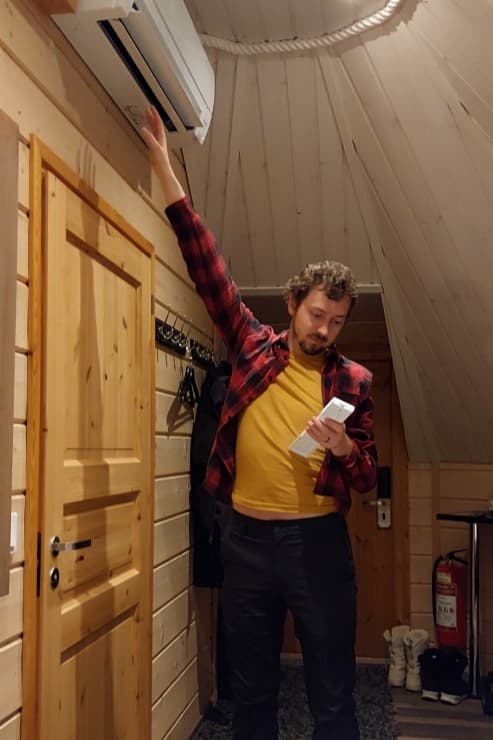
- Before going to bed, lay out everyone’s aurora-watching outfits
- Make sure everyone in your travel party has everything they need – from base layers to gloves
- If possible, place everyone’s outfit in a different location in your accommodation. That way you are not risking clothes will get mixed up, plus it means everyone is able to get dressed without getting into each other’s way (mega plus at 2am!)
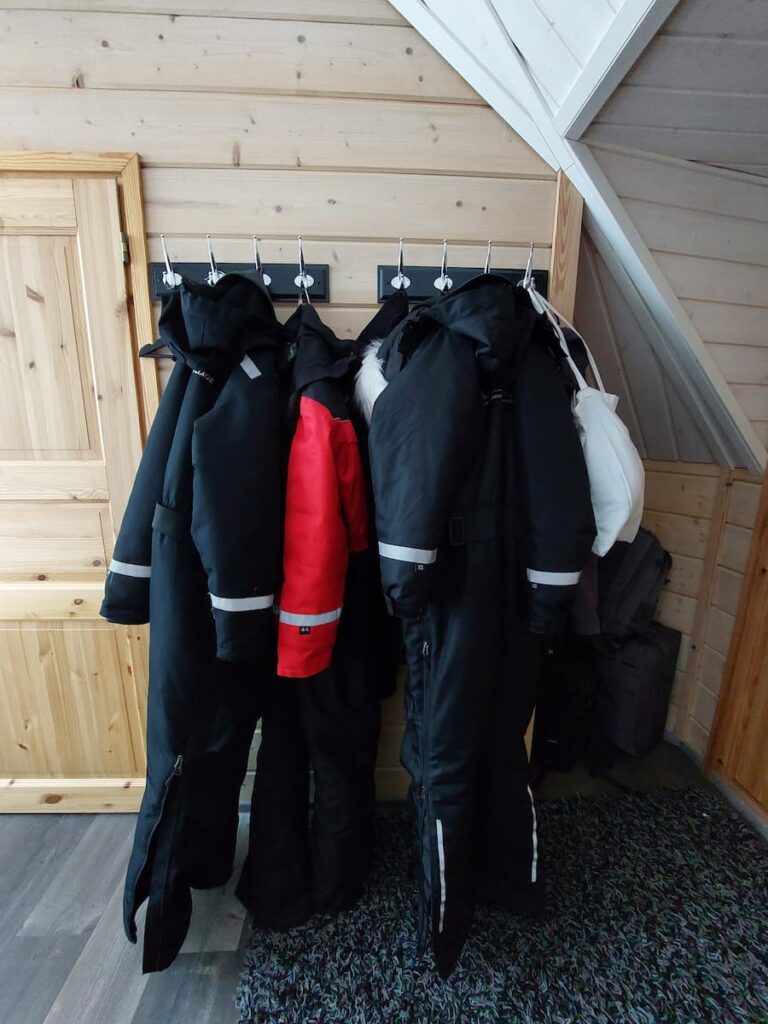
Tip 8: Pack a backpack
If you are planning to head out to see the Northern Lights when they appear (or even to check whether they did actually appear), make sure to pack your backpack the night before.
We did this even though we stayed in a northern lights resort—there was too much light pollution with people going in and out of their cabins when Aurora Borealis appeared, so we decided to venture further away, into the nearby forest (if you do this, watch out for snowmobiles!)
Knowing we’d be out for any length of time (you never know how long the beautiful show of lights will last for!), we wanted to be prepared.
What to consider when packing a backpack
Here are some things you might want to think about when packing your bag:
- Drinks. You probably won’t wanna waste time making a cup of tea, but if this is your plan, be prepared—have a kettle filled with water, a teabag ready in your thermos and everything laid out somewhere handy—so when your aurora alert goes off, you can quickly flick the kettle on, and make the tea while you are getting dressed.
- Snacks. Do you get hungry if you are suddenly up in the middle of the night? Hopefully, you read our advice here and brought good snacks with you to Lapland, so you can now pack some for aurora viewing. Also remember, eating food makes you warmer! (Unless you pack ice cream, of course!)
- Speaking of staying warmer, if you have emergency hand or feet warmers, make sure to pack these too.
- Tissues. Cold weather = snotty nose, leaky eyes and all sorts of fun stuff. Make sure you have tissues handy.
- Flashlight. For seeing where you are going. For setting up your camera. For signalling others. Yes we know phones come with a flashlight, but trust us, battery charge plummets in cold temperatures, and you will wanna use your phone for taking aurora pictures (and making sure it’s charged in case there is an emergency). Just don’t be an ass and don’t keep shining your flashlight around too much, creating light pollution!
- Powerbank. Speaking of batteries not lasting. Powerbanks are travel essentials for Lapland. Just make sure they are actually charged! And if you are charging them overnight, remember to grab them before you head out to see the Northern Lights!
- Lip balm. If your lips suffer as soon as you get out into the cold weather, make sure you always carry a lip balm when out and about (and even more so at night, when it’s totally freezing out there!).
- Accessories. We talked about this smart tip here—packing the small things into a backpack the night before, so you don’t forget them (or even drop them) in the chaos of getting ready in the middle of the night.
- Tripod. If you are planning on shooting the Northern Lights, make sure you have all your camera gear packed and ready to go. We even went as far as building our extendable tripod the night before and then carrying it outside already set up. This helped us save time and also our fingers—it’s incredibly hard to be fiddling with little screws and buttons in -10°C (plus when tired and excited because the NORTHERN LIGHTS ARE RIGHT ABOVE YOU!!).
Keep in mind, this is not an exhaustive list—these are just suggestions based on our experience and what we packed when aurora watching. Btw, you can see our full Lapland packing list here, if you want.
The main tip: think about this in advance. On your first day of being in Lapland. Not at night, when the aurora alert goes off and the world turns into a chaos (albeit a beautiful one).
Bonus tip
We’ve already mentioned it in this post, but Santa won’t put you on the Nice List if you don’t get travel insurance for your Lapland trip!
Because going to the Arctic where things are cold, icy and dark without insurance is very naughty.
So, if you want to ask Santa for that unlimited flight voucher (or the 5* Hawaii holiday or just the ability to eat foreign food without having an upset stomach), you’ve got to get on the Nice List by getting travel insurance.
We recommend True Traveller – it’s who we used for our full-time backpacking adventures.
If you want to find out more about why they are an awesome company, here is our review with all the important info you need to know.
And if you just want to read how crazy their customer service is, this is a story about the time we had to make a claim with them and what happened then (spoiler: it was totally crazy).
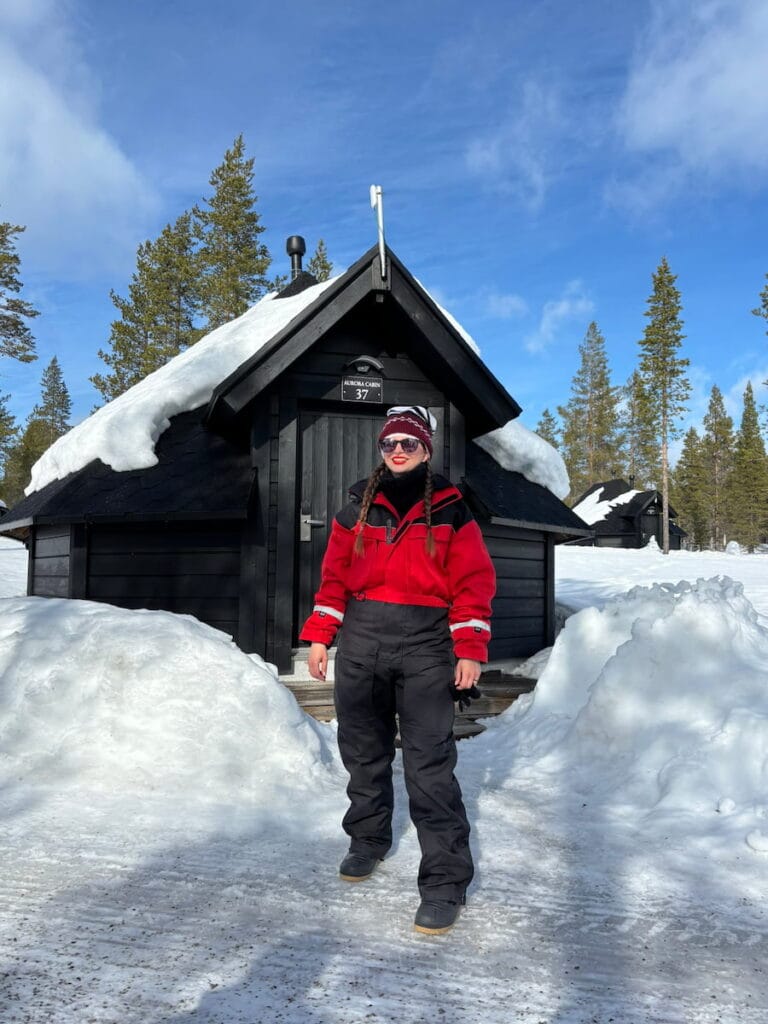
We hope this post helped you figure out what to wear to see the Northern Lights, so you’ll have a great time in Lapland and avoid losing your fingers. 😬
Remember to let us know where in your Lapland journey you are—we’ll live vicariously through your snowy escapades (and maybe set up flight alerts on Skyscanner, just in case 😅).

Hi!
We’re Mirka & Daniel — full-time travellers, professional overthinkers & bad luck magnets. We research EVERYTHING and then share all the weird travel tips with you here. Follow along to make your adventures easier! 🌴